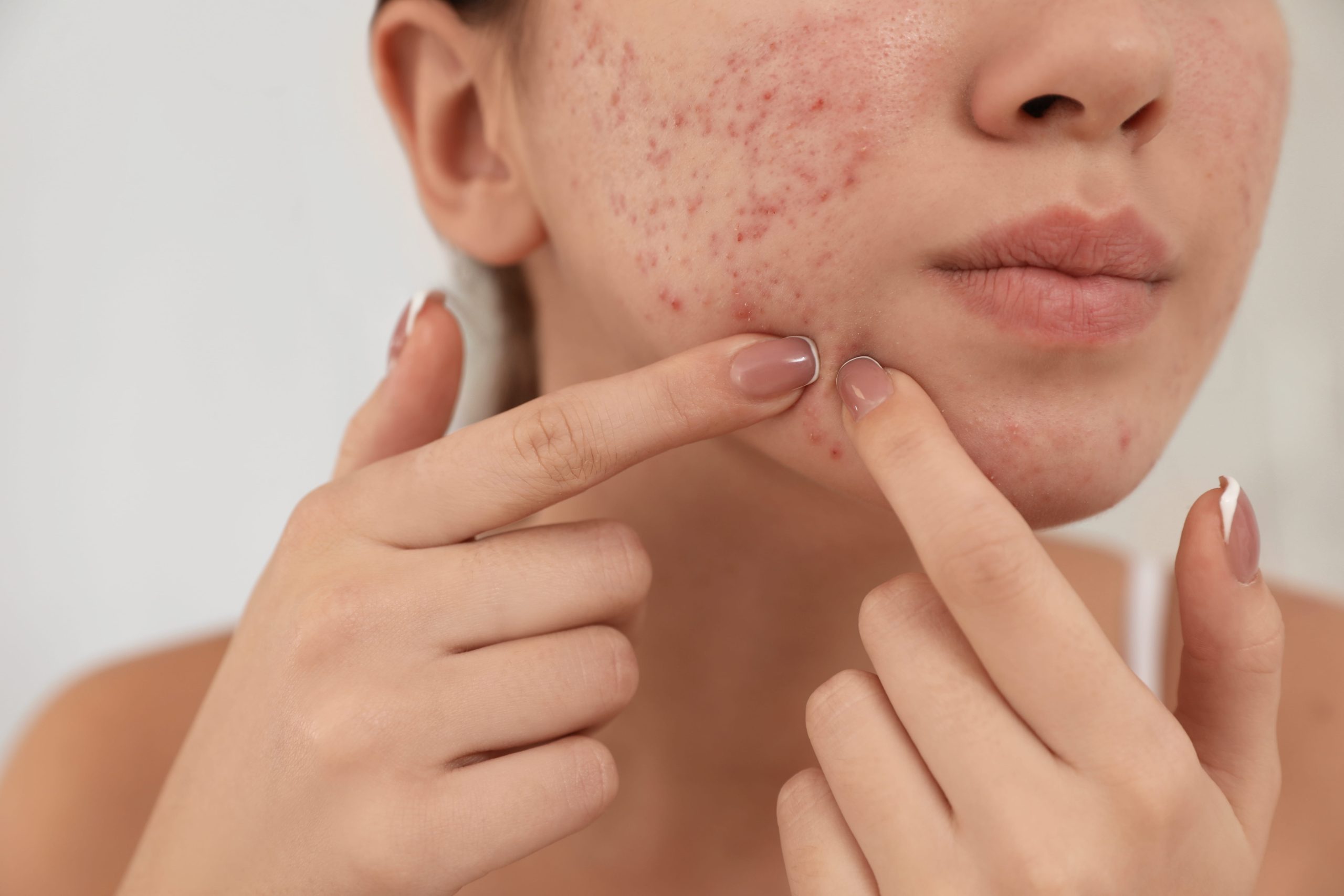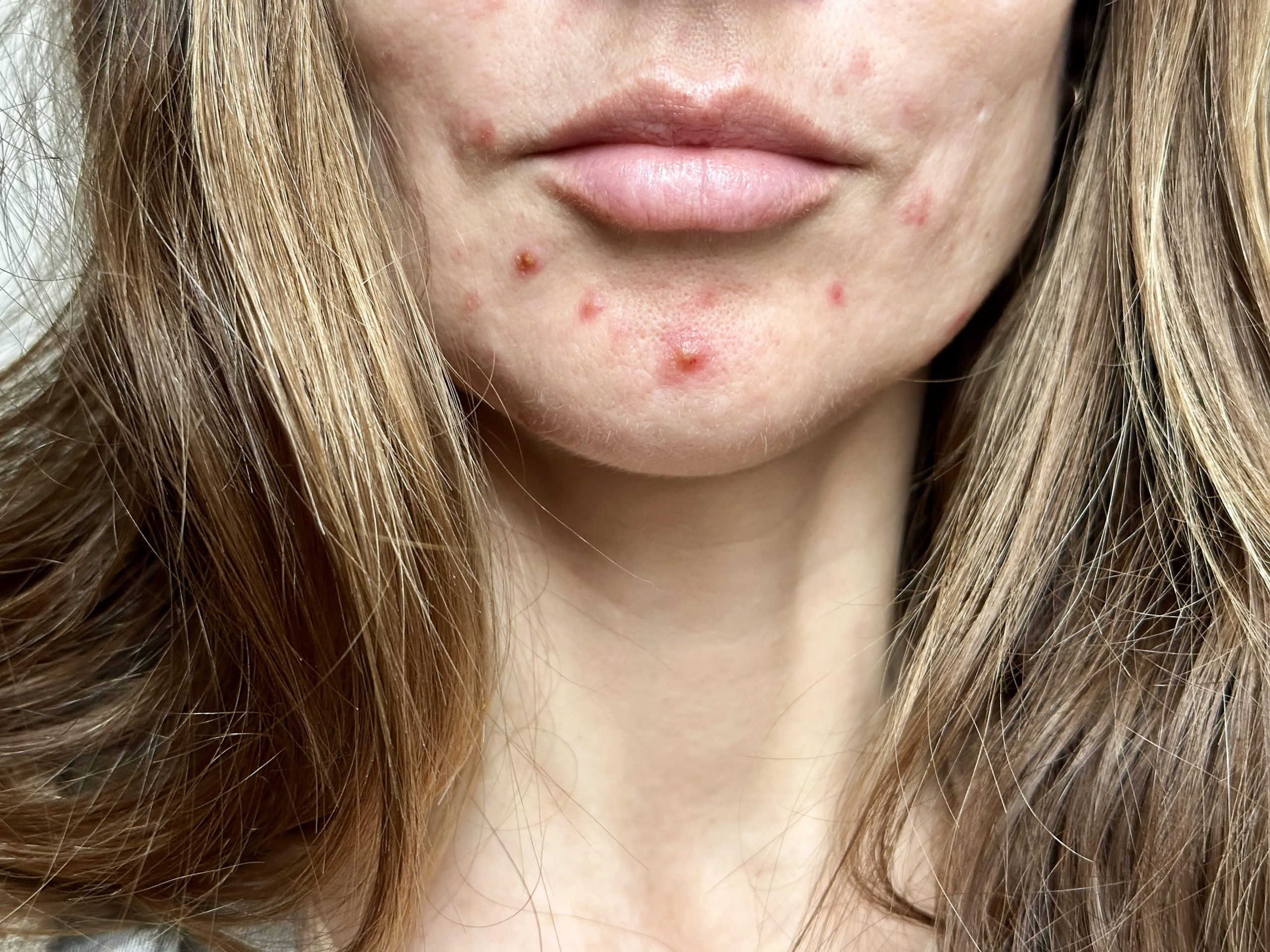

What Causes Cystic Acne?
Cystic acne develops through four interconnected biological mechanisms:
- Excess Sebum Production: Androgen hormones stimulate the sebaceous glands to produce high volumes of sebum (skin oil).
- Follicular Hyperkeratinisation: Skin cells lining the follicle shed abnormally fast, clumping together with excess oil to block the pore opening.
- Bacterial Proliferation: Cutibacterium acnes (C. acnes) can multiply rapidly within the anaerobic, oil-rich environment of the blocked pore.
- Inflammatory Cascade: The immune system responds to bacterial growth and follicular rupture by sending white blood cells to the area, creating severe, deep-seated swelling and pus.
Hormonal fluctuations can drive this pattern, particularly in adult women. Elevated androgen activity may keep sebum synthesis high, contributing to persistent breakouts along the jawline, chin, and lower face. Genetic predisposition, high-glycaemic diets, and Singapore’s persistent tropical humidity may further contribute to follicular blockage, although the evidence for individual factors varies.